Why Coating Matters for Fire Hydrants in Saudi Arabia
Saudi Arabia's climate places continuous stress on above-ground fire hydrants. Selecting the right coating system helps protect against UV exposure, corrosion, and environmental wear, supporting reliable long-term field performance.
Fire hydrants in Saudi Arabia are exposed to extreme environmental stress from the moment they are installed. Intense sunlight, high temperatures, dust, and coastal conditions represent the standard operating environment rather than exceptional cases.
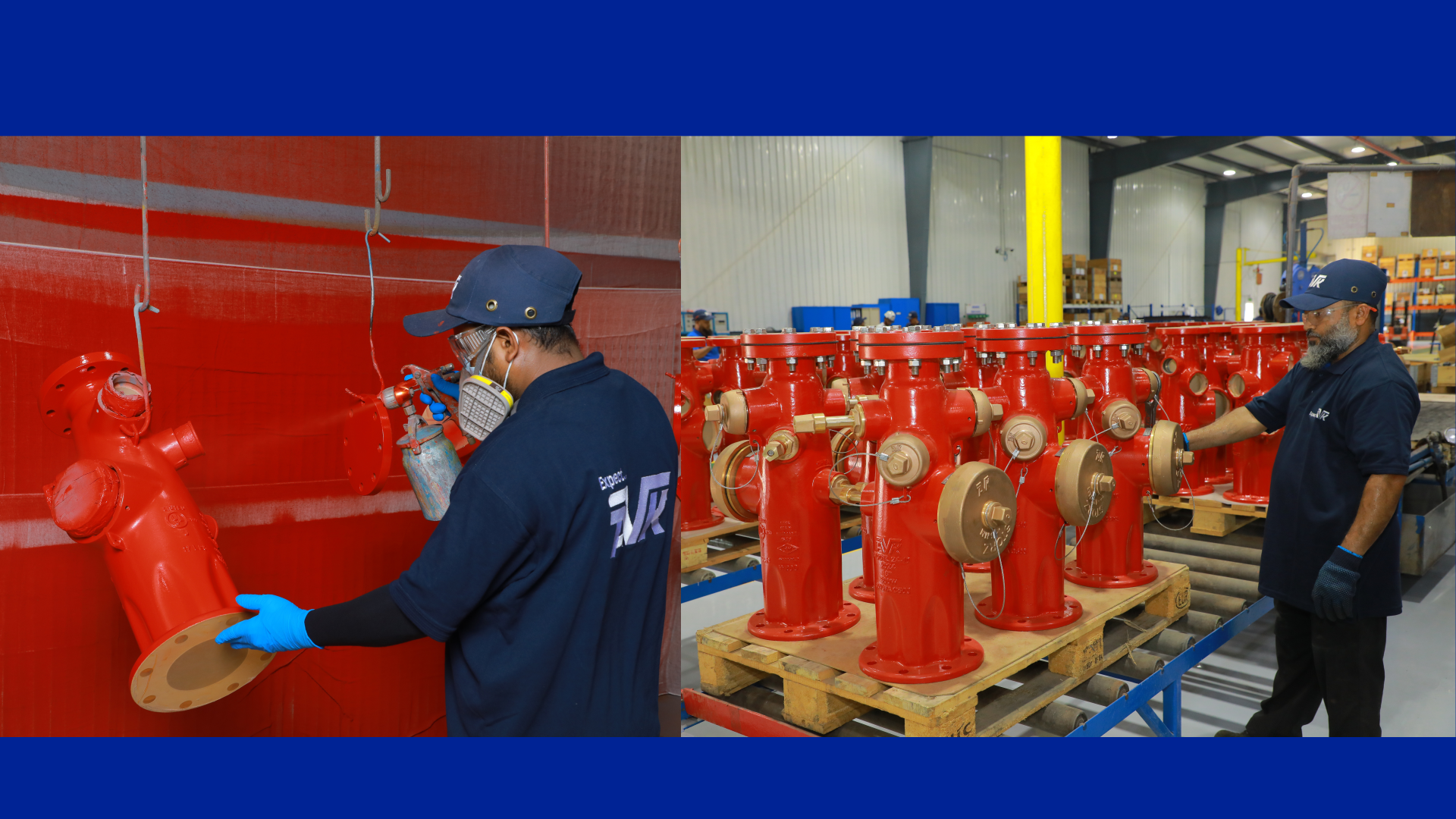
Under these conditions, coating is an engineering decision, not a visual one. Continuous UV exposure accelerates degradation of conventional coatings, leading to surface cracking, loss of mechanical properties, and increased corrosion risk. Above-ground hydrant components must be protected with coating systems specifically designed for long-term exposure to sunlight and heat.
In coastal and industrial areas, environmental impact becomes even more aggressive. Coating systems that are not selected in line with recognized marine and industrial standards tend to fail prematurely. The consequences are rarely immediate; they appear years later, when maintenance is more complex, access is limited, and corrective actions become costly.
Hydrant reliability is largely defined at the design and specification stage. When environmental conditions are properly assessed and appropriate coating systems are selected from the start, hydrants maintain their protective function, structural integrity, and operational reliability throughout their service life.
Under these conditions, coating is an engineering decision, not a visual one. Continuous UV exposure accelerates degradation of conventional coatings, leading to surface cracking, loss of mechanical properties, and increased corrosion risk. Above-ground hydrant components must be protected with coating systems specifically designed for long-term exposure to sunlight and heat.
In coastal and industrial areas, environmental impact becomes even more aggressive. Coating systems that are not selected in line with recognized marine and industrial standards tend to fail prematurely. The consequences are rarely immediate; they appear years later, when maintenance is more complex, access is limited, and corrective actions become costly.
Hydrant reliability is largely defined at the design and specification stage. When environmental conditions are properly assessed and appropriate coating systems are selected from the start, hydrants maintain their protective function, structural integrity, and operational reliability throughout their service life.