AVK Fire Hydrants: Performance or Urban Safety? Why Climate is not the only Factor
Selecting the right fire hydrant involves more than climate. AVK Saudi helps engineers choose between wet and dry barrel hydrants based on application, safety, maintenance, and performance.
It’s often assumed that the difference between wet and dry barrel hydrants is only about frost protection.
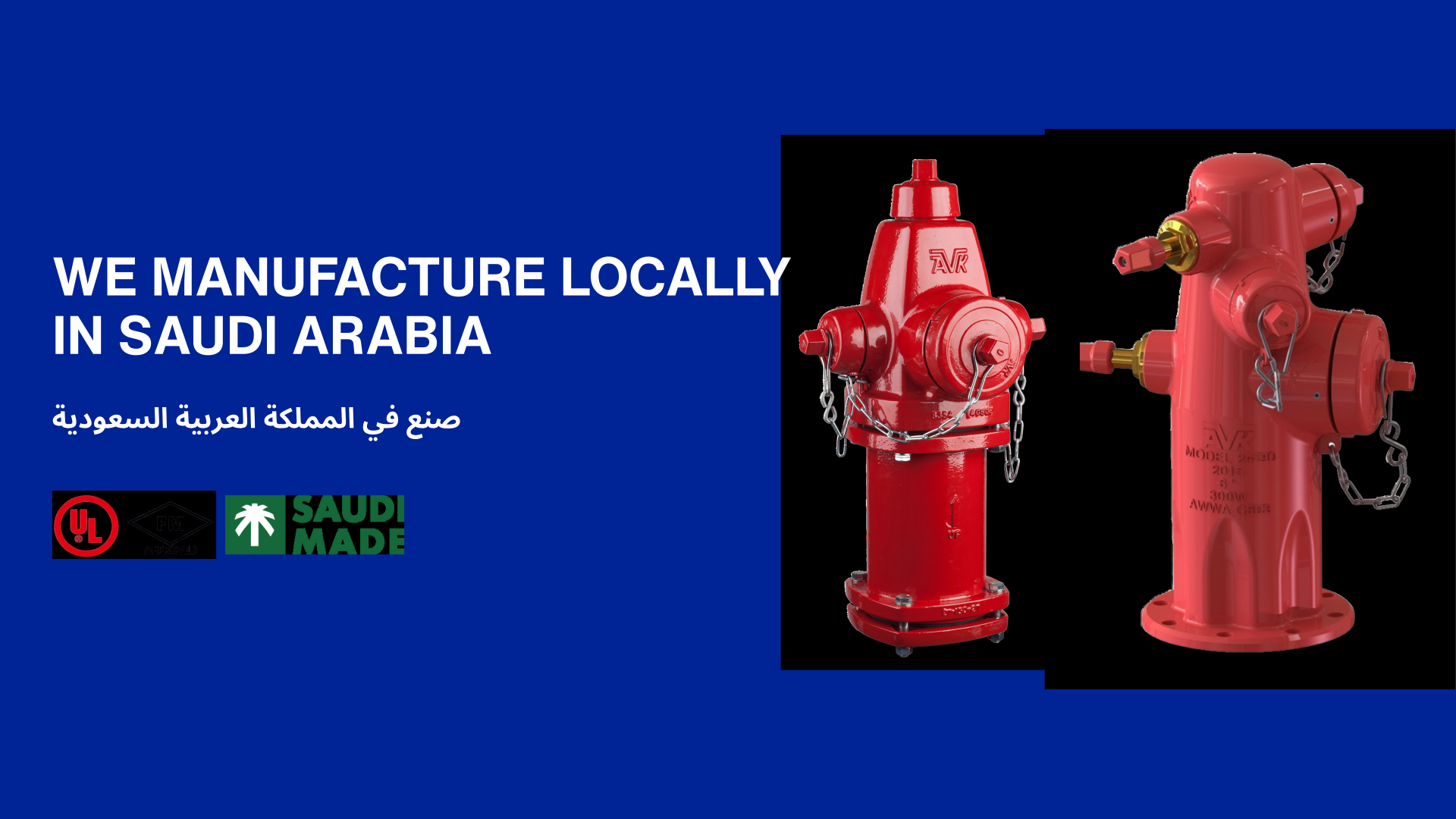
But for engineers and planners in warm regions like Saudi Arabia, choosing between AVK Series 24 (Wet Barrel) and AVK Series 27 (Dry Barrel) is a strategic decision based on performance, safety, and maintainability.
AVK Series 24 (Wet Barrel): The Industrial Choice
Designed for non-freezing regions, often selected where maximum efficiency and instant response are required.
- Higher performance: Rated at 300 PSI vs. 250 PSI for Series 27.
- Immediate flow: Water is always present up to the outlets, ensuring instant discharge.
- Heavy-duty firefighting: Often equipped with a 4" ANSI CL150 monitor flange for connecting fire monitors on industrial sites.
AVK Series 27 (Dry Barrel): The Urban Infrastructure Choice
- Developed in accordance with AWWA C502, with design features that also support busy urban environments.
- Traffic-proof safety: Breakable flange and stem coupling help reduce damage and prevent water loss after vehicle impact.
- Service under pressure: The upper section can be maintained without shutting down the water main, supporting uninterrupted network operation.
- Flexible installation: The nozzle section rotates 360° for alignment with street layouts.
Conclusion
Choose Series 24 when the project requires immediate water discharge and higher operating pressure for industrial facilities.
Choose Series 27 when traffic safety, maintenance access, and continuous water service are priorities for municipal infrastructure.
Both series are UL and FM approved, providing dependable performance for their intended applications.