Saudi Arabia’s strategic water reservoirs are built for long-term security. At Madinah ISWR, AVK Series 756 butterfly valves support dependable control across critical water infrastructure
Recent World Bank data reveals an interesting statistic: across the Gulf countries, one person consumes almost 550 litres of water per day. For comparison, in Germany the figure is only 120 litres. At the same time, the region has less than 100 m³ of naturally renewable freshwater resources per person per year. (Read the full article The Gulf’s race for water security)
These figures highlight a significant gap. At first glance, this may look like another statistic from the category of “the hotter the climate, the more water people use.” But look closer, and the numbers show not only resource scarcity, but an entire lesson in infrastructure and risk management.
System-Wide Infrastructure Reliability
When a resource is critically scarce, it stops being simply a utility service. In Saudi Arabia, which accounts for around 20% of global desalination output, the challenge has long moved beyond simply “producing and supplying water.” The real task is to preserve, redistribute, and deliver these volumes without interruption.
In July 2026, NWC commissioned five new strategic reservoirs in western Riyadh with a combined capacity of 180,000 m³, bringing the Kingdom’s total strategic storage to 21.8 million m³.
But this is not a story about simply “building something bigger.” It is about moving from individual assets to an integrated ecosystem.
Desalination plants, transmission networks, pumping systems, and buffer storage all form one interconnected chain. Without dependable performance from every component, the stated storage capacity loses much of its practical value.
A Buffer Between Production and Real Demand
A strong example is the Madinah ISWR (Independent Strategic Water Reservoir). The reservoir has a capacity of 6,439,000 m³ and is part of a national programme to develop 10 strategic reservoirs across the Kingdom, with a total capacity of 36 million m³, including projects in Jeddah, Makkah, Riyadh, and other regions.
- Production: Desalination plants and main pumping systems are designed for stable, continuous flow.
- Consumption: Urban networks operate dynamically — demand changes every hour, peak loads occur, and infrastructure requires scheduled maintenance.
35 Years Changes the Way a Business Thinks
The Madinah project is being implemented under a PPP model with a 35-year BOOT contract (Build-Own-Operate-Transfer).
And that period fundamentally changes the way technical solutions are selected. When a company is for an asset for more than three decades, the initial purchase price of equipment is no longer the main consideration.
Key Long-Term Questions:
-
Durability: How many opening and closing cycles can the sealing system withstand?
-
Maintenance: How often will the transmission line need to be taken out of service for maintenance?
-
Efficiency: What will the real Total Cost of Ownership (TCO) and Life Cycle Cost (LCC) be after 10, 20, or 30 years?
This is where a technical detail becomes a major economic factor.
Technical Solution: AVK Series 756
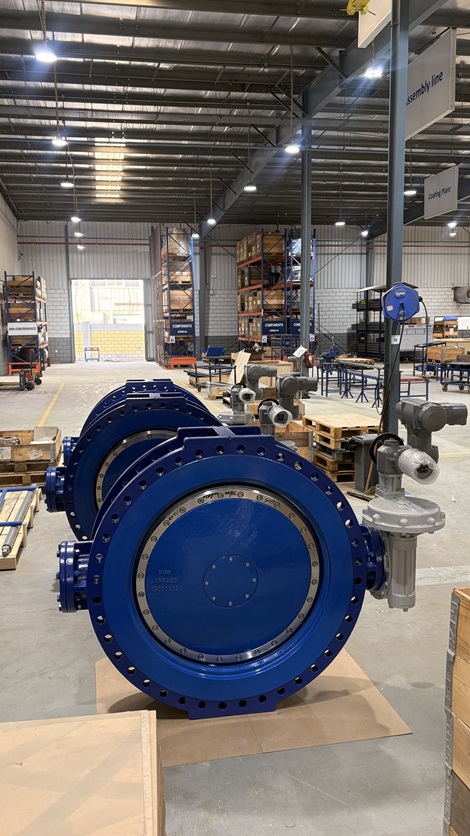
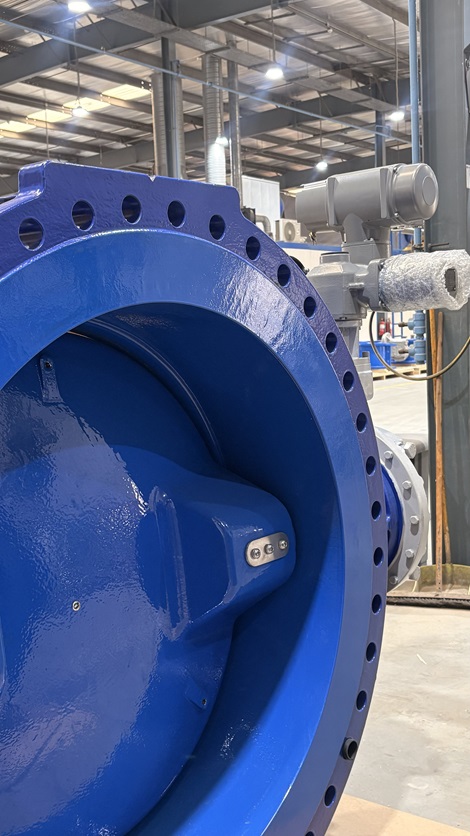
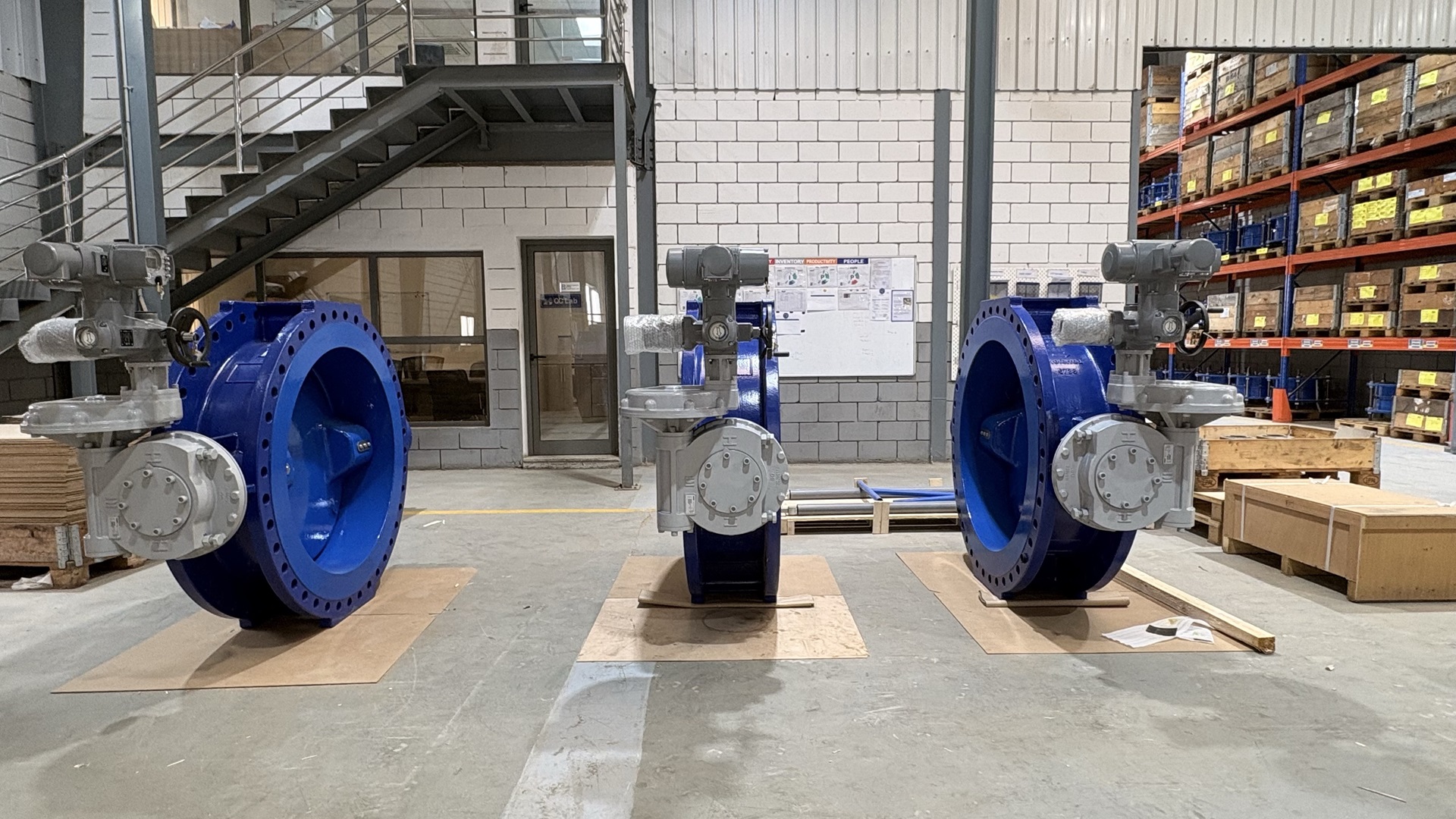
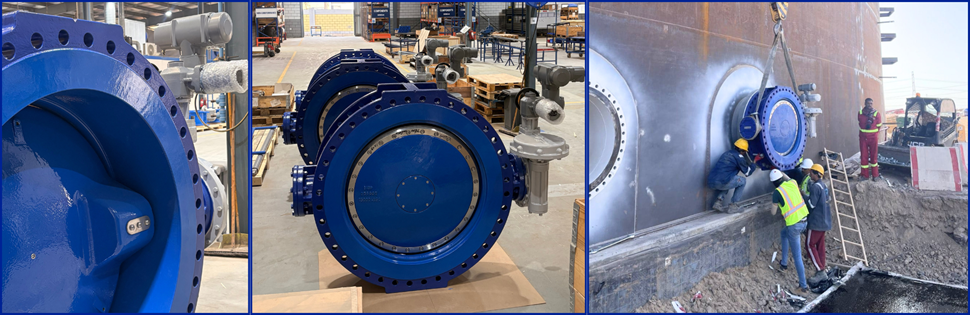
To address these challenges, AVK Series 756 double-eccentric butterfly valves were selected for the project:
- Dimensions: Up to DN1800
- Technical Specification: Flange drilling compliant with ANSI standards
To meet specific requirements set by SWA, custom-engineered butterfly valves were supplied in an adapted configuration tailored to these tasks:
| Feature / Modification | Engineering Benefit |
| Custom ANSI Adaptation | Reduced face-to-face dimension & ANSI flange drilling to ensure a leak-tight connection. |
| Double-Offset Design |
Reduces seal wear and friction during use, maintaining low operating torque through repeated open/close cycles. |
| High-Durability Coating | Provides superior corrosion protection against the working medium and environmental factors for extended service life. |
Project Stakeholders
- Client: WTCO (Water Transmission and Technologies Company)
- End User: SWA
- Contractor: Al Rawaf Contracting
By 2050, daily urban water demand in Saudi Arabia is expected to reach 21 million m³. As the system grows, the quality and dependability of every individual connection within it become increasingly important.
Water-supply resilience is built on thousands of engineering decisions capable of performing effectively for decades.
Where some may see only a figure of 6.4 million cubic metres, an engineer sees a controlled hydraulic system: flow distribution, pressure balancing, and the long-term performance of valves.